What Is DeFi and Why Investors Are Moving Toward It
What Is DeFi and Why Investors Are Moving Toward It is a critical question as the financial landscape undergoes significant transformation. Decentralized finance, or DeFi, is revolutionizing traditional finance by leveraging blockchain technology to create an open and transparent financial system. This movement enables anyone with internet access to participate in financial services, fostering innovation and accessibility.
As DeFi continues to evolve, it merges the principles of decentralization, transparency, and security, reshaping how people perceive investments and financial transactions. Investors are increasingly drawn to this new paradigm for its potential to deliver higher returns, lower barriers to entry, and unique opportunities that traditional finance often overlooks.
Introduction to DeFi: What Is DeFi And Why Investors Are Moving Toward It
Decentralized Finance, commonly referred to as DeFi, represents a shift from traditional financial systems to an open and permissionless financial infrastructure built on blockchain technology. This transformative approach is characterized by eliminating intermediaries, enabling peer-to-peer transactions, and providing users with more control over their financial assets. The advent of DeFi opens up new possibilities for financial inclusivity and innovation.The core principles of DeFi include transparency, accessibility, and programmability.
By utilizing blockchain technology, DeFi applications operate on decentralized networks, allowing for greater security and trust among participants. Unlike traditional financial systems that rely on centralized institutions, DeFi leverages smart contracts to automate and enforce agreements, significantly reducing the need for intermediaries. This evolution has provided opportunities for financial services like lending, borrowing, trading, and savings to be more accessible and efficient.
Significance of Blockchain Technology in DeFi, What Is DeFi and Why Investors Are Moving Toward It
The integration of blockchain technology is fundamental to the functionality and success of DeFi. Blockchain serves as a distributed ledger that ensures data integrity and immutability. The following points highlight the significance of blockchain in DeFi:
- Decentralization: By operating on a decentralized network, blockchain eliminates single points of failure, reducing the risk of fraud and increasing trust among users.
- Transparency: All transactions are recorded on a public ledger, allowing users to verify and audit financial activities easily.
- Programmability: Smart contracts enable the automation of complex financial agreements, which can execute automatically when predefined conditions are met.
- Accessibility: Anyone with internet access can participate in DeFi, which democratizes financial services and allows previously unbanked populations to engage in the economy.
- Interoperability: Various DeFi applications can communicate and interact with one another, creating a seamless ecosystem for users.
The transition from traditional finance to DeFi reflects a broader trend toward modernization and digitalization. Financial institutions have historically operated under a centralized model, which often results in inefficiencies and barriers to entry. As blockchain technology matures, it empowers developers to create innovative financial solutions that cater to a global audience. DeFi not only challenges the status quo of financial systems but also represents a growing desire for more equitable financial practices.
In summary, DeFi is reshaping the financial landscape by harnessing the power of blockchain technology, enabling new levels of transparency, efficiency, and inclusivity that were previously unattainable in traditional finance systems.
Key Components of DeFi
Decentralized Finance (DeFi) represents a paradigm shift in the financial landscape, leveraging blockchain technology to create an open-source, permissionless financial system. At the heart of DeFi are several key components that work synergistically to provide a diverse range of financial services without the need for traditional intermediaries. Understanding these components is crucial for investors looking to navigate this innovative space.
Smart Contracts
Smart contracts are self-executing contracts with the terms of the agreement directly written into code. They are foundational to DeFi applications, enabling trustless and automated transactions between parties without intermediaries. These contracts operate on blockchain platforms, most notably Ethereum, and automatically enforce contract conditions when predefined criteria are met.
“Smart contracts eliminate the need for intermediaries, reducing costs and increasing efficiency in transactions.”
Decentralized Exchanges
Decentralized exchanges (DEXs) are platforms that facilitate peer-to-peer trading of cryptocurrencies without the need for a centralized authority. Unlike traditional exchanges, DEXs allow users to retain control of their funds and trade directly from their wallets, enhancing security and reducing the risk of hacks associated with custodial exchanges.Some popular DEXs include:
- Uniswap: A leading DEX known for its automated liquidity provision.
- SushiSwap: A DEX that offers innovative features such as yield farming and staking.
- Curve Finance: Specializes in stablecoin trading with low slippage.
Lending Protocols
Lending protocols enable users to lend or borrow assets in a decentralized manner, often using collateral to secure loans. These platforms typically use smart contracts to automate the lending process and ensure that both lenders and borrowers fulfill their obligations. Users can earn interest on their crypto holdings by providing liquidity to the lending pools.Key elements of lending protocols include:
- Collateralization: Borrowers must lock up collateral to obtain loans, protecting lenders from defaults.
- Interest Rates: Rates are often determined algorithmically based on supply and demand dynamics within the platform.
Stablecoins in DeFi Ecosystems
Stablecoins play a vital role in DeFi by providing a stable medium of exchange that mitigates the volatility typically associated with cryptocurrencies. Pegged to fiat currencies or other assets, stablecoins facilitate trading and lending activities within DeFi platforms while preserving the value of transactions.Popular stablecoins include:
- USDC: A fully-backed USD stablecoin issued by regulated financial institutions.
- DAI: A decentralized stablecoin managed by the MakerDAO protocol, aimed at maintaining a 1:1 peg with the USD.
Liquidity Pools and Yield Farming
Liquidity pools are collections of funds locked in a smart contract that provide liquidity for trading on decentralized exchanges. Users, known as liquidity providers, deposit their assets into these pools and earn fees or rewards in return. Yield farming, on the other hand, is the practice of moving assets across different DeFi platforms to maximize returns on investments.The importance of liquidity pools and yield farming includes:
- Facilitating trades on DEXs by ensuring sufficient liquidity.
- Enabling users to earn passive income by providing liquidity and participating in yield farming strategies.
In summary, the key components of DeFi—smart contracts, decentralized exchanges, lending protocols, stablecoins, liquidity pools, and yield farming—create a robust and innovative financial ecosystem. Understanding these elements empowers investors to make informed decisions in this rapidly evolving landscape.
Benefits of DeFi for Investors
The rise of Decentralized Finance (DeFi) is transforming the landscape of financial investing, offering a myriad of advantages that enchants both seasoned and novice investors alike. With its promising features, DeFi presents a compelling case for moving away from traditional financial systems, showcasing potential benefits that can redefine investment strategies.One of the most enticing benefits of DeFi is the potential for higher returns compared to traditional investments.
In the DeFi space, investors can engage in yield farming and liquidity mining, enabling them to earn significant returns on their assets. For example, platforms like Aave and Compound allow users to lend their cryptocurrencies and earn interest rates that often exceed those available through conventional banks. Such rates can reach double digits, appealing to investors seeking to maximize their gains in a low-interest environment.
Transparency and Security in DeFi Transactions
The transparency and security provided by DeFi platforms are game-changers for investors. Every transaction in a DeFi ecosystem is recorded on a public blockchain, allowing anyone to verify the movement of funds. This level of transparency builds trust among investors, as they can easily audit and track their investments. Moreover, DeFi utilizes smart contracts to automate processes and minimize human error.
Smart contracts are self-executing contracts with the terms of the agreement directly written into code. This reduces the reliance on intermediaries, which can often be a source of delays and potential fraud in traditional finance. The decentralized nature of DeFi platforms means that they are less susceptible to hacking and manipulation compared to centralized financial institutions.
Minimizing Barriers to Entry for Investors
DeFi also plays a crucial role in minimizing barriers to entry, enabling a broader range of investors to participate in financial markets. Traditional investment avenues often require substantial capital, making them inaccessible for many individuals. In contrast, DeFi platforms often have no minimum investment requirements, allowing anyone with a small amount of cryptocurrency to start investing. For instance, platforms like Uniswap and PancakeSwap facilitate swapping of tokens without needing to set up accounts or go through extensive verification processes.
This democratization of finance encourages greater participation, fostering a more inclusive financial ecosystem. Furthermore, DeFi projects often provide educational resources and community support, empowering investors to make informed decisions regardless of their prior financial experience.
“DeFi is not just about finance; it’s about financial freedom.”
Risks Associated with DeFi
Investing in Decentralized Finance (DeFi) can offer substantial opportunities, but it also presents a unique set of risks. Understanding these risks is crucial for investors who want to navigate the DeFi landscape effectively. This section will Artikel the primary risks associated with DeFi, providing insights to help you make informed decisions.
Smart Contract Vulnerabilities
Smart contracts are self-executing contracts with the terms of the agreement directly written into code. While they automate transactions and reduce the need for intermediaries, they are not without their vulnerabilities. Bugs or flaws in the code can be exploited by malicious actors, leading to significant financial losses. Notable examples include the DAO hack in 2016, where vulnerabilities allowed attackers to siphon off $60 million worth of Ether.
Investors should conduct thorough audits and adopt risk mitigation measures when engaging with DeFi protocols.
Market Volatility
The DeFi market is known for its extreme volatility, which can dramatically impact investment values. Prices of tokens can fluctuate wildly within short periods, influenced by factors such as market sentiment, liquidity levels, and broader cryptocurrency trends. For instance, during high market stress, liquidity can dry up, leading to significant price swings. Investors must be aware of the volatility inherent in DeFi and implement strategies, such as diversification and stop-loss orders, to manage potential risks associated with price fluctuations.
Regulatory Risks
DeFi operates in a relatively unregulated environment, which can lead to uncertainty for investors. As governments and regulatory bodies begin to pay closer attention to the cryptocurrency space, changes in regulations can have immediate implications for DeFi protocols. For example, a crackdown on certain practices deemed illegal could render some DeFi projects unviable, impacting investments. Investors should remain informed about regulatory developments and consider the legal implications of engaging with specific DeFi platforms.
“Understanding the risks in DeFi is as crucial as recognizing its benefits, as it allows for informed investment decisions amidst a rapidly evolving landscape.”
Investment Strategies in DeFi
Investors are continuously exploring new avenues to maximize returns and manage risks in the rapidly evolving landscape of decentralized finance (DeFi). As traditional investment methods undergo transformation, DeFi introduces innovative strategies that harness the power of blockchain technology. This section delves into various investment strategies within DeFi, focusing on liquidity provision, staking, and essential risk management techniques.
Liquidity Provision and Staking
Liquidity provision and staking are two prominent strategies that investors can adopt in the DeFi ecosystem. Liquidity provision involves supplying assets to decentralized exchanges (DEXs) to facilitate trading, allowing investors to earn transaction fees. Staking, on the other hand, is the process of locking up tokens in a blockchain network to support its operations while earning rewards. Understanding these strategies is crucial for investors looking to navigate the DeFi space effectively.Investors can leverage liquidity pools on various platforms, where they deposit tokens in exchange for liquidity provider (LP) tokens.
These LP tokens represent the investor’s share of the pool and can be used to claim rewards. Staking often provides a more straightforward approach, where tokens can be staked directly into protocols to earn passive income.Here’s a table outlining different DeFi platforms and their unique features:
| Platform | Unique Features |
|---|---|
| Uniswap | Automated market maker (AMM) with support for various ERC-20 tokens. |
| Aave | Flash loans and a wide range of supported assets for lending and borrowing. |
| Yearn.Finance | Yield optimization strategies with vaults that automatically move funds for higher returns. |
| Compound | Algorithmic interest rate protocol that allows users to lend and borrow assets. |
| Curve Finance | Optimized for stablecoin trading with low slippage and high efficiency. |
Risk Management Techniques
Managing risk is vital in the volatile DeFi landscape. Several methods can help investors safeguard their assets while participating in DeFi investments. Implementing diversified portfolios, setting stop-loss orders, and using risk assessment tools are effective strategies for mitigating risks.Investors should consider diversifying their assets across multiple platforms and types of investments to reduce exposure to any single asset’s volatility. Additionally, using stop-loss orders can help automatically sell assets if they fall below a specified price, minimizing potential losses.
Diversification is key to managing risk in DeFi; spreading investments can shield against market fluctuations.
Utilizing risk assessment tools and analytics can provide insights into the health of investments and market trends. Continuous monitoring of positions and staying informed about changes in protocols can also significantly reduce risks associated with DeFi investing. Engaging with community forums and following DeFi news can further enhance an investor’s ability to navigate this complex space effectively.
Future of DeFi
Source: intelligenthq.com
The decentralized finance (DeFi) space is rapidly evolving, and its future is poised to be shaped by several significant trends and challenges. With advancements in technology and increasing interest from traditional finance, understanding the trajectory of DeFi is crucial for investors and stakeholders alike.As DeFi continues to grow, interoperability—the ability for different DeFi platforms and traditional financial systems to work together—will play a vital role.
This could lead to an integrated finance landscape, where users seamlessly navigate between decentralized and centralized services. Additionally, innovations such as cross-chain capabilities and layer-2 solutions are likely to enhance user experience and accessibility in DeFi platforms.
Trends Shaping DeFi
The future of DeFi is likely to be influenced by several key trends that enhance its functionality and user adoption:
- Interoperability: The push for cross-platform integration will enable users to move assets seamlessly between different blockchains and financial services, increasing liquidity and functionality.
- Institutional Involvement: As more traditional financial institutions explore DeFi, their participation could catalyze regulatory clarity and boost mainstream adoption, bridging the gap between decentralized and traditional finance.
- Enhanced User Experience: User-friendly interfaces and improved educational resources will make DeFi more accessible to the average investor, driving broader participation.
- Regulatory Developments: Ongoing discussions around regulatory frameworks may lead to clearer guidelines that could protect investors while fostering innovation within the DeFi sector.
Challenges for Wider Adoption
Despite its potential, DeFi faces several significant hurdles that need to be addressed for broader acceptance:
- Security Concerns: Smart contract vulnerabilities and hacks remain a critical issue, emphasizing the need for robust security measures and audits in DeFi projects.
- Regulatory Scrutiny: As governments intensify their regulatory focus, DeFi projects may face challenges that could restrict their operations or impose compliance burdens.
- User Education: The complexity of DeFi products and services can deter new users. Simplifying these concepts will be essential for attracting a wider audience.
- Market Volatility: Price fluctuations in cryptocurrencies can lead to instability, which may discourage traditional investors from participating in DeFi markets.
Predictions for Investor Behavior
As DeFi continues to mature, investor behavior is expected to shift in several ways:
- Increased Participation: A greater understanding of DeFi’s benefits may lead to more investors diversifying their portfolios to include DeFi assets alongside traditional investments.
- Focus on Yield Opportunities: As DeFi protocols offer higher yields compared to traditional banking products, investors may increasingly seek out these opportunities for passive income.
- Risk Management Strategies: With heightened awareness of risks associated with DeFi, investors may develop more sophisticated risk management practices, including the use of insurance protocols and diversified investments.
- Community Engagement: Investors may become more involved in governance decisions of DeFi platforms, leveraging their voting power to influence project direction and sustainability.
“The future of DeFi is not just about technology; it’s also about building trust and understanding in a rapidly changing financial landscape.”
Case Studies of Successful DeFi Projects

Source: imgix.net
The landscape of decentralized finance (DeFi) has been rapidly evolving, with numerous projects making significant strides in reshaping traditional financial systems. This section delves into some exemplary DeFi projects, showcasing their contributions and the challenges they have faced over time. These case studies highlight how innovative solutions in DeFi have not only attracted investors but have also impacted the broader financial ecosystem.
Successful DeFi Projects Overview
Several DeFi projects have emerged as leaders in the space, each with its unique features and approaches. The impact of these projects on the financial landscape is profound, evidenced by their rapid growth and the challenges they have encountered along the way. Below is a comparative overview of some prominent DeFi projects:
| Project | Launch Year | Core Functionality | Unique Aspects | Challenges Faced |
|---|---|---|---|---|
| Aave | 2020 | Lending and Borrowing | Flash loans, liquidity pools | Regulatory scrutiny, market volatility |
| Uniswap | 2018 | Decentralized Exchange | Automated market maker (AMM) model | High gas fees, competition from centralized exchanges |
| Compound | 2018 | Lending and Borrowing | Interest rate model, governance token (COMP) | Smart contract risks, liquidity issues |
| SushiSwap | 2020 | Decentralized Exchange | Community-driven, yield farming | Concerns over its origin, sustainability |
These projects illustrate the diversity within the DeFi sector. Aave, for example, has positioned itself as a leader in lending and borrowing, offering unique features like flash loans that allow users to borrow funds without collateral, provided the loan is repaid within the same transaction. However, Aave has faced challenges related to regulatory scrutiny as governments worldwide begin to take a closer look at DeFi practices.Uniswap revolutionized the concept of decentralized exchanges by introducing the automated market maker model, which replaces traditional order books with liquidity pools.
Despite its success, Uniswap has struggled with high gas fees, especially during periods of network congestion, which can deter users from trading on the platform.Compound is a pioneer in the lending space, utilizing a governance token (COMP) that allows users to participate in decision-making processes. While it has gained popularity, Compound has experienced issues related to smart contract vulnerabilities that have raised concerns among investors.SushiSwap, which originated as a fork of Uniswap, has differentiated itself by fostering a strong community and offering yield farming incentives.
Nevertheless, it has faced skepticism over its sustainability and the transparency of its governance structure.
“The success of these DeFi projects showcases the transformative potential of decentralized finance in modernizing financial services.”
These case studies demonstrate that while DeFi offers immense opportunities for innovation, it is also accompanied by inherent risks and challenges that stakeholders must navigate. The successes and hurdles faced by these projects provide valuable insights into the evolving nature of finance in a decentralized world.
Conclusion and Outlook
DeFi has emerged as a transformative force in the investment landscape, reshaping how individuals engage with financial systems. Its decentralized nature offers a plethora of opportunities that challenge traditional finance, enabling more accessible and innovative financial products. As investors increasingly recognize the potential of DeFi, understanding its implications becomes essential for navigating this evolving terrain.The ongoing development in the DeFi space signifies a shift in traditional investment paradigms.
Investors are encouraged to keep abreast of DeFi advancements, as the landscape is constantly changing with new protocols, regulatory updates, and technological innovations. Monitoring industry news, following thought leaders, and engaging with platforms that aggregate DeFi data are crucial to staying informed.
Strategies for Engaging with the DeFi Community
Building connections within the DeFi community can provide valuable insights and opportunities. Here are effective strategies for fostering engagement:
Join Forums and Social Media Groups
Participating in dedicated forums like Discord or Telegram groups allows investors to connect with like-minded individuals and experts. Platforms such as Twitter and Reddit are also valuable for real-time discussions and updates.
Attend Webinars and Conferences
Engaging in virtual or in-person events helps investors learn about new projects and market trends directly from industry leaders. Networking at these events can lead to partnerships or investment opportunities.
Contribute to Open Source Projects
Many DeFi protocols are built on open-source technology. Contributing code or providing feedback on these projects can enhance understanding and establish credibility within the community.
Experiment with DeFi Protocols
Hands-on experience with different DeFi platforms can deepen understanding of their functionalities and risk profiles. Investors can start with smaller amounts to explore yield farming, lending, or liquidity provision.By adopting these strategies, investors can not only stay informed but also gain a competitive edge in the rapidly evolving DeFi space. The future of decentralized finance holds enormous potential, and active participation is key to leveraging its benefits effectively.
Conclusive Thoughts
Source: bitdegree.org
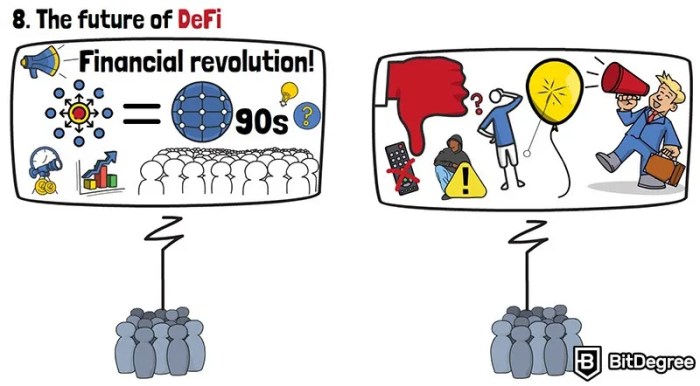
In conclusion, DeFi presents a dynamic shift in the investment landscape, offering exciting opportunities while also posing certain risks. As more investors seek to understand and engage with DeFi, staying informed about its developments is crucial for making educated decisions. By embracing this innovative financial approach, investors can position themselves at the forefront of a rapidly changing environment and potentially reap significant rewards.
Detailed FAQs
What are some common DeFi platforms?
Some popular DeFi platforms include Uniswap, Aave, and Compound, each offering unique features for trading, lending, and borrowing.
How do investors earn money in DeFi?
Investors can earn money in DeFi through yield farming, staking, and providing liquidity to decentralized exchanges.
Is DeFi safe for investments?
While DeFi offers many benefits, it also comes with risks such as smart contract vulnerabilities and market volatility, so investors should conduct thorough research.
What is yield farming in DeFi?
Yield farming is a strategy where investors provide liquidity to DeFi platforms in exchange for rewards, often in the form of tokens or interest.
How does DeFi compare to traditional finance?
DeFi differs from traditional finance by eliminating intermediaries, offering global access, and utilizing blockchain technology for transparency.